Dodaj zdjęcie
68 zdjęcia


Odwiedź ta restauracja, aby zjeść obiad w, jeśli czujesz się głodny po podziwianiu Leineschloss (Landtag Niedersachsen). Jeśli lubisz kuchnię Międzynarodowa, powinieneś odwiedzić Leineschloss. Łatwo znaleźć to miejsce dzięki wygodnej lokalizacji. Atmosfera gościnności ta restauracja w dużej mierze zależy od personel, którzy są miły tutaj. To jest niezwykłe, że ten usługa jest zauważany jako profesjonalny. Na pewno polubisz ładny Atmosfera. Leineschloss zgarnęła nagrodę Bib Gourmand za dobre posiłki w rozsądnych cenach.
Często wspominane w recenzjach
Opinie odwiedzających o Leineschloss
/ 88
 Poproś o usunięcie treści
Wojtek Wasag
6 roku temu na Google

Warte odwiedzin ale nie za wszelką cenę
 Poproś o usunięcie treści
Jaroslw Kucharek
7 roku temu na Google
Stary budynek zadowy blisko park no jak? Fajowo
 Poproś o usunięcie treści
Karl 1974
7 roku temu na Google
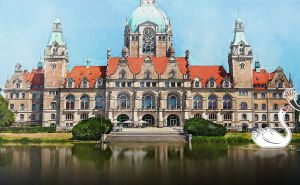
The Leineschloss (English: Leine Palace), situated on the Leine in Hanover, Germany, is the former residence of the Hanoverian dukes, electors and kings. Currently it is the seat of the Landtag of Lower Saxony. The first building on the site was a Franciscan friary, constructed in about 1300, which was abandoned in 1533 after the Protestant Reformation. In 1636, George, Duke of Brunswick-Lüneburg, began construction of a rather small late renaissance palace on the site as his residence. Elector Ernest Augustus had it enlarged and modernized and added a theatre in the late 17th century. In 1742 the north-west wing was renewed. Between 1816 and 1844, the architect Georg Ludwig Friedrich Laves fully re-built the palace. The column portico with six Corinthian columns was built during this period.During World War II, the Leineschloss burnt out entirely after British aerial bombings. King George I of Great Britain was originally buried in the Chapel of the Leineschloss, but his remains, along with his parents', were moved to the 19th-century mausoleum of King Ernest Augustus in the Berggarten of Herrenhausen Palace after World War II. Architect Dieter Oesterlen re-built the palace between 1957 and 1962.In August 2016 bones were found in the Leineschloss during a renovation project; it was believed that the bones were the remains of Philip Christoph von Königsmarck, the lover of the wife of the later king George I of Great Britain who was killed there in July, 1694. However, subsequent tests proved that some of the bones were from animals, while the human bones came from at least five different skeletons. None have been proven to belong to Königsmarck.
Wszystkie recenzje
Międzynarodowa
€€€€
Zakres cenowy na osobę
€10 - €20

© OpenStreetMaps
contributors
Adres
Hannah-Arendt-Platz 1, Hanower, Lower Saxony, Niemcy
Cechy
Akceptowane karty kredytowe
Brak dostawy
Siedzenia na zewnątrz
Rezerwacja
Dostęp dla wózków inwalidzkich
Godziny otwarcia
| PoniedziałekPn | 11:30-14:30 |
| WtorekWt | 11:30-22:00 |
| ŚrodaŚr | 11:30-22:00 |
| CzwartekCz | 11:30-22:00 |
| PiątekPt | 11:30-22:00 |
| SobotaSo | 17:30-22:00 |
| NiedzielaNd | Zamknięte |
Strona internetowa
Instagram
@votum_restaurant
Zgłoś nieprawidłowe informacje